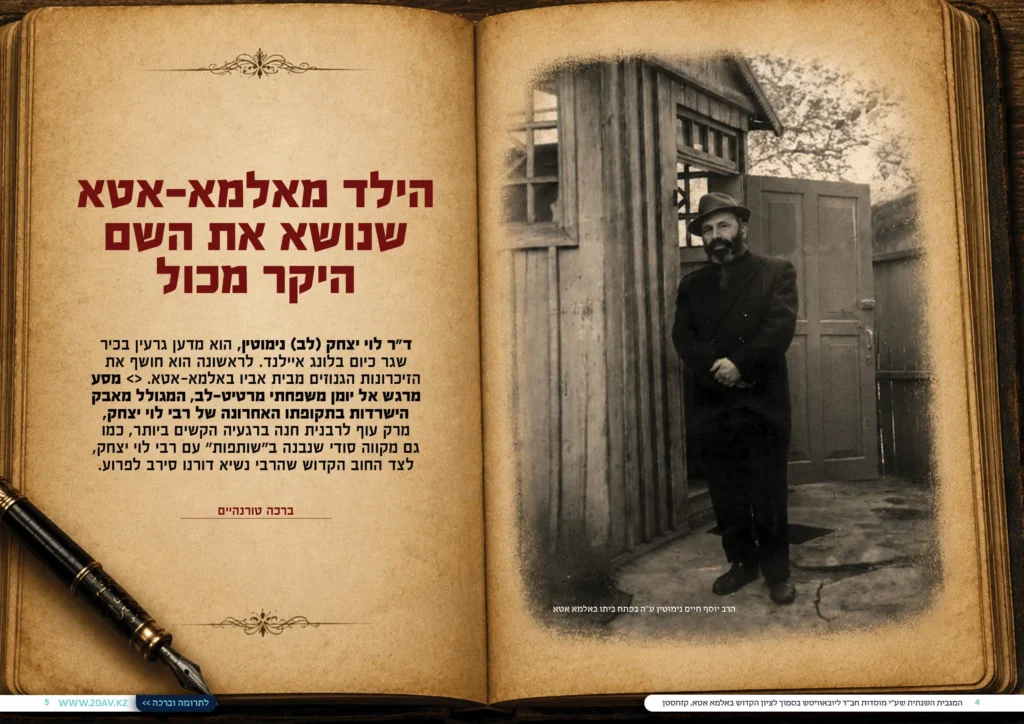
Dr. Levi Yitzchok (Lev) Nimotin is a senior nuclear scientist living today on Long Island. For the very first time, he reveals the hidden memoirs from his father’s home in Alma-Ata. An emotional journey into a poignant family diary that chronicles a struggle for survival during the final days of Rabbi Levi Yitzchok, chicken soup brought to Rebbetzin Chana in her darkest hours, a secret mikvah built in “partnership” with Rabbi Levi Yitzchok, and a holy debt that the Rebbe refused to consider settled.
An Unexpected Encounter by Rebbetzin Chana
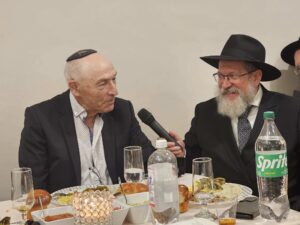
“It happened just a few months ago,” recalls Mrs. Leah Levin, principal of Ateret Chaya Mushka School in Crown Heights.
“We had come to the Rebbe’s Ohel with the girls from our school camp. After davening and reciting Tehillim near Rebbetzin Chana’s resting place, I noticed an elderly couple standing nearby. They were watching the girls with great interest and were visibly moved by the sight of them reciting Tehillim.”
After some time, the woman approached Mrs. Levin and introduced herself as Rina. She asked about the group, then began sharing their remarkable story.
“We came to America in 1978,” she said, pointing to her husband. “He was born in Alma-Ata, and his name is Levi Yitzchok. When he was born, Rebbetzin Chana personally asked his mother to name him after her late husband, Rabbi Levi Yitzchok.”
Her husband was Levi Yitzchok (Lev) Nimotin, now a distinguished scientist. He had grown up among the Chassidim of Alma-Ata and carried vivid memories of the city’s underground Jewish life.
As they continued speaking, Mrs. Levin told the Nimotins about the work of Chabad in Kazakhstan and the campaign to support their activities. When Lev heard about the campaign, he immediately decided to contribute $120. In the dedication accompanying his donation, he wrote:
“To the blessed memory of my first Alef-Beis teacher and the best friend of my father in Alma-Ata. Dedicated by Levi Yitzchok ben Chaim Yosef David Nimotin”
He was referring to Rabbi Hillel Liberow, a veteran Chabad Chassid who had studied in Tomchei Temimim, later served as a mashpia in Orsha, and went on to become the rav and shochet of the Jewish community in Alma-Ata. Known for his devotion to spreading Yiddishkeit under Soviet rule, he lived for years under the constant threat of arrest, and remained in Alma-Ata at the Rebbe’s direction until his passing.
“I understood that I had met someone whose memories could open a rare window into Jewish life in Alma-Ata,” Mrs. Levin recalls. “I knew we had to record his story.”
Not long afterward, the interview took place. At its conclusion, Levi Yitzchok sent Mrs. Levin a digital copy of the private diary of his father, the venerable Chassid Reb Yosef Nimotin, who stood at the side of Rabbi Levi Yitzchok and Rebbetzin Chana during some of their most difficult years.
The handwritten diary contains a firsthand account of the final, turbulent period of Rabbi Levi Yitzchok’s life in Alma-Ata.
This is their story.
Alma-Ata, Remembered
For Chabad Chassidim around the world, and especially for those connected to the shlichus in Kazakhstan, Alma-Ata is more than a place on the map. It is the city where Rabbi Levi Yitzchok Schneerson endured his final years of exile and where he was laid to rest.
For decades, the story of those years has been known through published memoirs and historical accounts. Now, a rare firsthand record brings us closer to the people who lived through them.
Dr. Lev (Levi Yitzchok) Nimotin is a renowned nuclear scientist who grew up in Alma-Ata under the watch of the Soviet authorities. At Rebbetzin Chana’s personal request, he was named for her husband, Rabbi Levi Yitzchok.
Dr. Nimotin has now shared pages from the private diary of his father, Reb Yosef Nimotin, offering a firsthand view of Rabbi Levi Yitzchok’s final years and of the Chassidim who stood beside him.
From Leningrad to Alma-Ata
The Nimotin family had deep Chassidic roots reaching back to the first Chabad Rebbeim. Dr. Nimotin’s father, Reb Chaim Yosef David Nimotin, was the son of Reb Shmuel Nimotin, a trusted emissary of the Rebbeim in Petersburg. He was named for his own grandfather, a Chassid of the Tzemach Tzedek.
During World War II, as Leningrad came under brutal Nazi siege, the Nimotin family fled on overcrowded refugee trains. After a grueling journey, they reached Alma-Ata, Kazakhstan, far from the front.
In his diary, Reb Yosef describes the impression made on him by the Tian Shan mountains surrounding the city, their peaks covered in clean white snow. He also recorded how, because he suffered from a serious heart condition, a medical board declared him unfit for military service, a decision that likely saved his life.
The family first settled in Tastak, then a remote rural district on the outskirts of Alma-Ata. They rented a small corner of a kitchen in a house made of saman, mud bricks mixed with straw and water. The roof was thatched, the floor was bare earth, and rainwater leaked in whenever there was a storm. On one occasion, a venomous snake crawled beneath their bed.
Food was scarce and prices were crushing. A single loaf of bread could cost an astronomical two hundred rubles on the black market.
To protect his family and help other Jews living under constant threat of arrest, Reb Yosef learned how to maneuver within the Soviet system. He built relationships with police officers and government officials, sometimes hosting them for elaborate meals with generous amounts of vodka, despite the financial and personal strain involved. He also befriended his neighbors and earned their trust.
Three Thousand Rubles
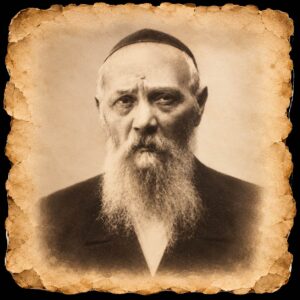
The arrival of the Rebbe’s parents in Alma-Ata marked a turning point in the lives of Reb Yosef and his wife, Tzviah. In his diary, Reb Yosef refers to Rabbi Levi Yitzchok Schneerson, the renowned rav and kabbalist, as “the Yekaterinoslav Rav.”
He records the moment that led to their rescue:
“‘Yosef, stop!’ called Reb Yaakov Yosef Raskin, a respected Lubavitcher Chassid, as he ran toward me, struggling to catch his breath.
“‘Yosef, if it were possible to bring your father here, but it would cost three thousand rubles, would you give the money?’
“‘Of course,’ I answered.
“‘Well, there is a chance to bring the Yekaterinoslav Rav, Rabbi Levi Yitzchok Schneerson, and his Rebbetzin to Alma-Ata. They were exiled deep into Kazakhstan, to Chi’ili, and are living in terrible conditions, far from any Jewish community. But I need three thousand rubles immediately.’
“I was carrying two heavy buckets of water, and Shabbos candle-lighting was approaching. But without another word, I asked him to follow me. Within minutes, I handed him the entire sum.”
Reb Mendel and Bat-Sheva Althaus then undertook the difficult journey to Chi’ili and brought Rabbi Levi Yitzchok and Rebbetzin Chana to Alma-Ata.
A close bond soon developed between the Nimotins and the Rebbe’s parents. Reb Yosef recalled seeing Rabbi Levi Yitzchok for the first time on Shabbos morning, “in his full spiritual majesty,” in a makeshift shul housed in a basement. The small group of Chabad Chassidim in the city pooled their resources to rent an apartment for the Rav and Rebbetzin.
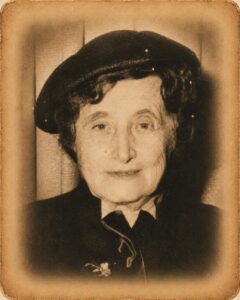
Reb Yosef soon became one of the Rav’s trusted confidants. Every Thursday evening, a Chassid named Tzale would visit him, and Reb Yosef would provide five hundred rubles toward the couple’s weekly expenses.
On one occasion, when Rabbi Levi Yitzchok learned that Reb Yosef was traveling to Tashkent, he summoned him and entrusted him with a sealed, confidential letter. Reb Yosef carried out the mission with great care and a deep sense of responsibility.
Years later, he told his son that Rabbi Levi Yitzchok seemed to sense that his life was drawing to a close. His greatest worry was what would become of Rebbetzin Chana, alone in a distant land, separated from her children.
In his diary, Reb Yosef describes a painful scene:
“Rebbetzin Chana, was walking back and forth, weeping bitterly.
“‘Why are you crying, Chana?’ I asked.
“She slowed her pace and pointed toward the door. ‘I just went in to see him. He is lying there crying. I asked him, “Why are you crying?” He answered, “Whom am I leaving you with?”’
“I did not ask for more details. I simply said with certainty, ‘Chana, you will yet live to be with your children.’
“She stopped, looked at me with a sharp, burning gaze, and then resumed pacing in tears.
“At first, I felt embarrassed, as though I had said something impossible. At the time, I could never have imagined that fifteen years later, the Rebbe’s mother would be living with her son, the Rebbe, in America.”
The dreaded day came in Menachem Av 5704 (August 1944). On Rabbi Levi Yitzchok’s final night, Reb Yosef heard him say, “This will last only a short time, and then one must be cast into another world, a higher one.”
The following day, Rabbi Levi Yitzchok’s soul was returned to its Maker.
As the funeral procession departed, Rebbetzin Chana cried out:
“Groyser mentsh, oyf vemen hostu mir ibergelozn? Great man, to whom have you left me?”
Reb Yosef records another heartbreaking scene from the weeks that followed:
“Rabbi Levi Yitzchok is no longer in this world. The Rebbetzin lives alone in a small room on our street.
“It is Friday, shortly before candle-lighting. I pass her window and call out, ‘Rebbetzin Chana, did you cook anything for Shabbos?’
“A faint voice answers, ‘Why do you ask? Do you not see my situation?’
“I ran home and told Celia [his wife], ‘Chana Meirovna [using the respectful Russian father-name format, daughter of Rabbi Meir] has nothing for Shabbos. Take a jar, fill it with soup, add a piece of chicken, and I will bring it to her.’
“The Rebbetzin stood by the window, reached out her hands, and took the food.”
Dr. Levi Yitzchok Nimotin recalls that his father, using his unique way of speaking, told his mother: “From now on, our chicken will have only one leg.” Namely, half of whatever they had would be set aside for Rebbetzin Chana.
Into the Icy River
Shortly before Rabbi Levi Yitzchok’s passing, Reb Yosef and Celia were called to see him one final time.
It was Shabbos afternoon. Reb Yosef describes how the Rav’s bed had been moved into the courtyard, where he lay weak and suffering.
“Do not think that I was always so broken,” Rabbi Levi Yitzchok told them.
He then gave Celia a warm bracha and fell silent, absorbed in thought.
After his passing, the Chassid Reb Moshe Chaim Dubrovsky approached Reb Yosef with an urgent matter. Before his passing, the Rav had requested that no one who had not immersed in a mikvah that day touch his body. But there was no functioning mikvah in Alma-Ata.
“Let us go to the quarry and immerse there,” Reb Moshe Chaim said.
Reb Yosef records what followed:
“We hurried to the river. The water was rushing down from the high mountains separating China from the Soviet Union. It was bitterly cold, and the current was so powerful that it carried heavy stones with it.
“I stood there, unsure what to do. Then I saw Moshe Chaim leap directly into the freezing water.
“Risking my life, I jumped in after him and immersed.
“Without saying a word, we continued to the funeral.”
The Train to Moscow
Three years passed.
Reb Yosef records in his diary how he decided, on his own initiative, to send Rebbetzin Chana to Moscow, the first step toward her eventual departure from the Soviet Union.
When he told her of the plan, she accepted it calmly, despite the dangers involved in such a journey. Celia, however, was alarmed. She could not understand how he intended to send an elderly and frail woman alone on the long train ride.
Reb Yosef found a solution. An elderly couple, the Solodovnikovs, were also traveling to Moscow, and he persuaded them to accompany the Rebbetzin. He arranged seats for all three in the same carriage so they could look after her throughout the journey.
In his diary, Reb Yosef writes with admiration of the Rebbetzin’s composure. The night before her departure, he carefully packed all her belongings. She watched in silence, never complaining or asking who would meet her when she arrived.
On the day of the journey, he personally saw that her luggage was loaded into the freight car. After settling her into her seat, he hurried to a nearby market, bought a basket of fresh strawberries, and placed it on the table in her compartment moments before the train pulled away.
Decades later, after reaching the United States himself, Reb Yosef looked back on that journey with pride. His efforts had helped set in motion Rebbetzin Chana’s escape from the Soviet Union, allowing her to spend nearly another twenty years in America near her son, the Rebbe.
The Keeper of the Tziyun
After Rebbetzin Chana left Alma-Ata, Reb Yosef Nimotin remained behind. He now felt a personal responsibility to care for the holy tziyun of Rabbi Levi Yitzchok.
For decades, until he left the Soviet Union in 1979, Reb Yosef saw to the upkeep, cleanliness, and protection of the holy gravesite in the Alma-Ata cemetery.
He writes in his diary:
“American visitors, Lubavitcher Chassidim [referring to the Chassid Reb Berel Levy], began coming to Alma-Ata. They photographed the resting place of the Rebbe’s father and brought the pictures to his son, our Rebbe.”
“One evening, Lozik, [Reb Elazar Gorelik], called me from Tashkent. He said that an instruction had come from the Rebbe to replace the liba, the stone slab over the grave. The original inscription was to be preserved exactly, with the exception of the final word, ‘Tanuach (rest).’”
“My father did not wait to be begged,” Dr. Lev Nimotin says. “He regarded it as his personal responsibility.”
Together with Jews who traveled from Tashkent and Samarkand, Reb Yosef arranged for the old stone to be replaced with a more dignified monument. The task was difficult and dangerous. They had to locate a Jewish, Shabbos-observant engraver, arrange for Hebrew lettering to be carved openly in the Soviet Union, and then transport and install the stone without attracting unwanted attention.
“Two months later,” Reb Yosef writes, “an instruction arrived from the Rebbe that the pieces of the old inscription should be buried within the grave itself, exactly as we had intended from the beginning.”
When Reb Yosef and Tzviah finally received permission to leave the Soviet Union, they entrusted the keys and responsibility for the tziyun to the Aronov family, relatives of their son Yehoshua’s wife.
“They cared for it faithfully,” Dr. Lev relates, “regularly sending photographs and updates. They continued until the fall of the Soviet regime and the arrival of the Chabad shluchim, who care for the site today.”
Jewish Life Underground
The Jews and Chassidim who remained in Alma-Ata did everything they could to preserve a religious life under Soviet persecution. Reb Yosef describes a basement shul where they gathered to daven and learn. On Shabbos, elder Chassidim came to the Nimotin home for farbrengens, singing niggunim and drawing strength from one another.
Among the songs they sang was one with the refrain: “Even if the pain seems endless, never forget that you are a Jew.”
Reb Yosef was constantly looking for ways to help Jews in danger or distress. On one occasion, he arranged a clandestine wedding for a poor orphaned Jewish girl, gathering a secret minyan so that she could marry according to halachah.
For a time, Alma-Ata also became a refuge for Jews who had run afoul of the Soviet authorities because of their observance. Reb Yosef’s home served as a point of contact for those seeking help.
To protect them, he maintained dangerous and costly relationships with local police officers and officials from the anti-speculation department. He hosted them for lavish meals with large quantities of vodka, using the access he gained to intervene on behalf of Jewish families facing arrest.
In one case, he secured the release of a couple and their two daughters who had been arrested for illegally dyeing and selling socks.
In another, he helped an elderly Jewish teacher suffering from a severe skin condition. The man had become so ashamed of his appearance that he was wasting away at home. Reb Yosef persuaded a Jewish doctor who directed a local hospital to admit him for treatment, saving his life.
The Fifty-Ruble Mikvah
The most ambitious of Reb Yosef’s underground efforts was the construction of a mikvah.
The absence of a mikvah in Alma-Ata troubled him deeply, and he resolved to build one secretly beneath his home at 69 Ushakov Street. During a trip to Tashkent, he consulted a Torah scholar familiar with the complex halachos of mikvah construction.
Reb Yosef had expected the project to cost around five hundred rubles. Instead, he learned that a fully kosher mikvah, built with rainwater collection and two adjoining pits, would require five thousand rubles.
The figure seemed impossible.
Upon returning to Alma-Ata, Reb Yosef went directly to the tziyun of Rabbi Levi Yitzchok. In his pocket were fifty rubles given to him by his friend Reb Yaakov Lepkivker, who had succeeded in leaving the Soviet Union after davening at the tziyun.
Standing at the grave, Reb Yosef held up the money and said through his tears:
“Tatenyu, Rebbe, I have come to make a business arrangement with you. If you lend your support, the mikvah will be built. From today, you are my partner in this project, and these fifty rubles are the first investment in our partnership.”
The miracle was not long in coming.
Soon afterward, Reb Berl Lipshitz, a Chassid from Tashkent, arrived in Alma-Ata. Years earlier, his friend Reb Mendel Klein had told him, “If you wish to live a long life, help build mikvahs.”
Reb Berl inspected the large basement beneath the Nimotin home and pointed out where they should begin digging. His daughter then arranged for a truck to deliver three tons of cement.
When the invoice arrived, the total was exactly fifty rubles!
Reb Elazar Gorelik brought detailed halachic instructions from Tashkent, and the mikvah was eventually completed under the supervision of the noted rav, Rabbi Zalman Buber of Tashkent.
Each morning, Reb Yosef rose before dawn to tend the furnace and heat the water. Chassidim traveling from across the Soviet Union would immerse in the hidden mikvah before continuing to the tziyun of Rabbi Levi Yitzchok.
Becoming a “Nobody”
The Nimotin family’s departure from the Soviet Union was a story of careful planning and remarkable determination.
Beginning in 1972, they lived as refuseniks, repeatedly denied permission to leave. Dr. Lev Nimotin was then a gifted mechanical engineer who had completed his doctorate in Leningrad and held a position with a high-level security clearance.
He understood that the authorities would never allow him to emigrate while he remained in such a sensitive role.
“A year before we submitted our official application,” he recalls, “I resigned from all my professional positions and gave up my security clearance. I deliberately turned myself into a professional ‘nobody.’
“I took a job at a remote, insignificant facility and submitted the papers from there.”
Once he no longer had access to classified information, the authorities had less reason to keep him in the country. In 1978, he and his family finally received exit visas.
They first traveled to Vienna, where they told representatives of the Jewish Agency that they wished to continue to the United States. From there, they were sent to Rome, and in the winter of 1978, they arrived in New York.
His parents followed one year later, in 1979.
The Name He Carries
The bond between Rebbetzin Chana and Reb Yosef and Celia Nimotin was exceptionally close.
When their son was born in 1946, Rebbetzin Chana asked that he be named for her late husband, Rabbi Levi Yitzchok. As Dr. Nimotin explains, she feared that no child in Alma-Ata would carry his name. In the two years since his passing, not a single Jewish boy born in the city had been named after him.
Celia later described the bris in her memoirs, with Reb Yosef adding in his own handwriting:
“Time passed, and a son was born to us. We invited Rebbetzin Chana to the bris. When she entered our home, it seemed as though a great light filled the room. Tears shone in her eyes when the child was given the name Levi Yitzchok.”
“That is how I received this great name,” Dr. Nimotin says. “Only after arriving in America did I begin to understand what it demanded of me.”
While working at Brookhaven National Laboratory, he wore his kippah openly and felt a constant responsibility to live up to the name he carried.
“I felt that I had to strive for excellence in everything and be especially careful, both in Yiddishkeit and in my scientific work. I worried that any failure on my part could reflect on the honor of the Rebbe and his father.
“Carrying this name has been a lifelong responsibility.”
“A Chassidishe Beyndl”
The Nimotin family’s connection with the Rebbe continued after they settled in Crown Heights in 1979.
At the farbrengen of Chof Menachem Av 5744, marking forty years since the passing of Rabbi Levi Yitzchok, the Rebbe announced that he would distribute mashke from a bottle sent from an underground Chassidic gathering behind the Iron Curtain.
The Rebbe then called on those who had personally assisted his father to come forward.
“Those who merited to attend to my father and teacher should not act out of humility or modesty, but should come forward now to receive mashke,” the Rebbe said.
Reb Yosef approached and received a cup of l’chaim from the Rebbe.
On another occasion, he received an urgent phone call one Friday afternoon.
“Reb Binyamin Klein, the Rebbe’s secretary, called my home and said, ‘Rabbi Hodakov would like to speak with you.’
“Rabbi Hodakov came on the line and told me, ‘The Rebbe has received a report that the stone identifying who is buried at the tziyun in Alma-Ata has been broken.’ He asked what I thought should be done.
“I told him that I would immediately contact my daughter-in-law’s parents in Alma-Ata, who were caring for the tziyun.”
After checking the site, they reported that the stone was intact and that all the gold lettering remained in place.
“I called Rabbi Klein back immediately,” Reb Yosef writes. “He thanked me and said he would inform Rabbi Hodakov, who would presumably update the Rebbe at once.”
Of all the distinctions Reb Yosef received, one statement remained especially precious to him. Years earlier in Alma-Ata, Rabbi Levi Yitzchok had blessed him with long life and said in front of the Chassidim:
“Un a Chassidishe beyndl iz Yosef – Yosef is a true Chassidic bone.” The expression describes someone who is a Chassid to his very core, with Chassidus embedded in his very being.
“That description meant more to my father than any professional title,” Dr. Lev says. “It expressed exactly who he was.”
The Rebbe repeatedly expressed his appreciation to the Nimotin family for all they had done for his father and mother, blessing them and assisting them over the years. Yet he never treated that debt of gratitude as something that had been fully repaid.
When Reb Yosef passed away on 14 Elul 5751, 1991, the Rebbe paid him a final tribute. He came out personally and accompanied the levayah through the streets of Crown Heights for a considerable distance, longer than was his usual custom.
It was a final honor for the “Chassidishe beyndl” who had cared for the Rebbe’s parents in Alma-Ata, shared his family’s meager food with Rebbetzin Chana, and built a secret mikvah under Soviet rule.
Today, his son, nuclear scientist Dr. Lev Nimotin, is translating the nine hundred handwritten pages of his father’s memoirs from his home on Long Island. Through his work, the experiences of the Chassidim of Alma-Ata, and the mesiras nefesh on which Jewish life in Kazakhstan was rebuilt, are being preserved for future generations.
